Mastering the interplay of shadow and light is key to creating dynamic, powerful images from the camera sensor. Harsh directional light functions as an essential tool, removing complexity for visual simplification. Tonal contrast allows you to isolate a subject by cutting out background clutter with a good composition. With the use of shadowing, it's possible to sculpt a clean silhouette that pulls the viewer's eye straight to your focal point.
Beyond simple illumination, these fundamental elements dictate the underlying mood and emotional weight of a scene. The contrast between bright highlights and deep shadows/shapes allows our eyes to distinguish form, depth, and distance. This natural interaction maps out physical boundaries, giving structure, and how a viewer navigates around the final version of the image…
Camera settings
Shoot in RAW (NEF): Switch the image quality from JPEG to RAW. This captures the maximum amount of sensor data, allowing you to recover hidden details from deep shadows and bright highlights during the editing process.
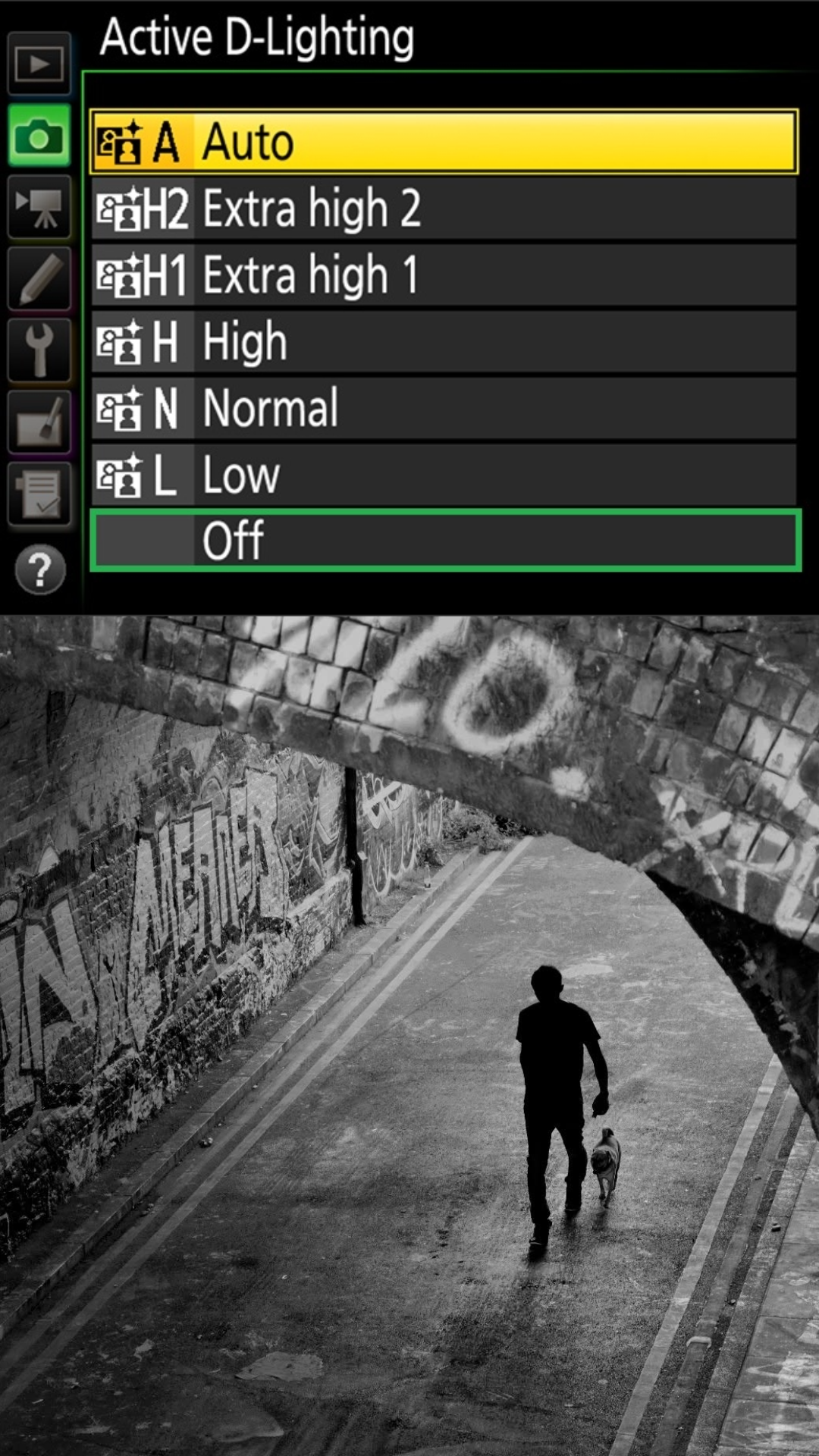
Turn OFF Active D-Lighting: If you leave it on, it will try to illuminate your subject/focal point. This feature will try to recover shadows, which is exactly the opposite of what you want in order to achieve a good silhouette.
Switch to Spot Metering: Set the metering mode to Spot Metering. This forces the focus to read the light from a single, precise point within the frame, preventing background light from ruining your subject's exposure.
Photography might mean "painting with light", but it's the shadows that build an image. The real skill is knowing how to use them. Shadows are not merely the absence of light; they are active compositional tools that define form and outline, a visual mass, and introduce mystery. By intentionally choosing what to reveal and what to conceal, you move away from simply documenting a scene and begin dictating its emotional narrative.
Additional tips
ISO - keep low (100-200), high ISO creates grain that could ruin shadows.
Aperture - F8/F11: use narrow apertures for sharp, hard-edged geometrics.
Shutter speed - faster speeds produce darker areas for a natural look.
Exposure compensation - set the exposure compensation dial to -1/-2 EV.
Find hard light sources - midday sun or artificial light dictate shadow size.